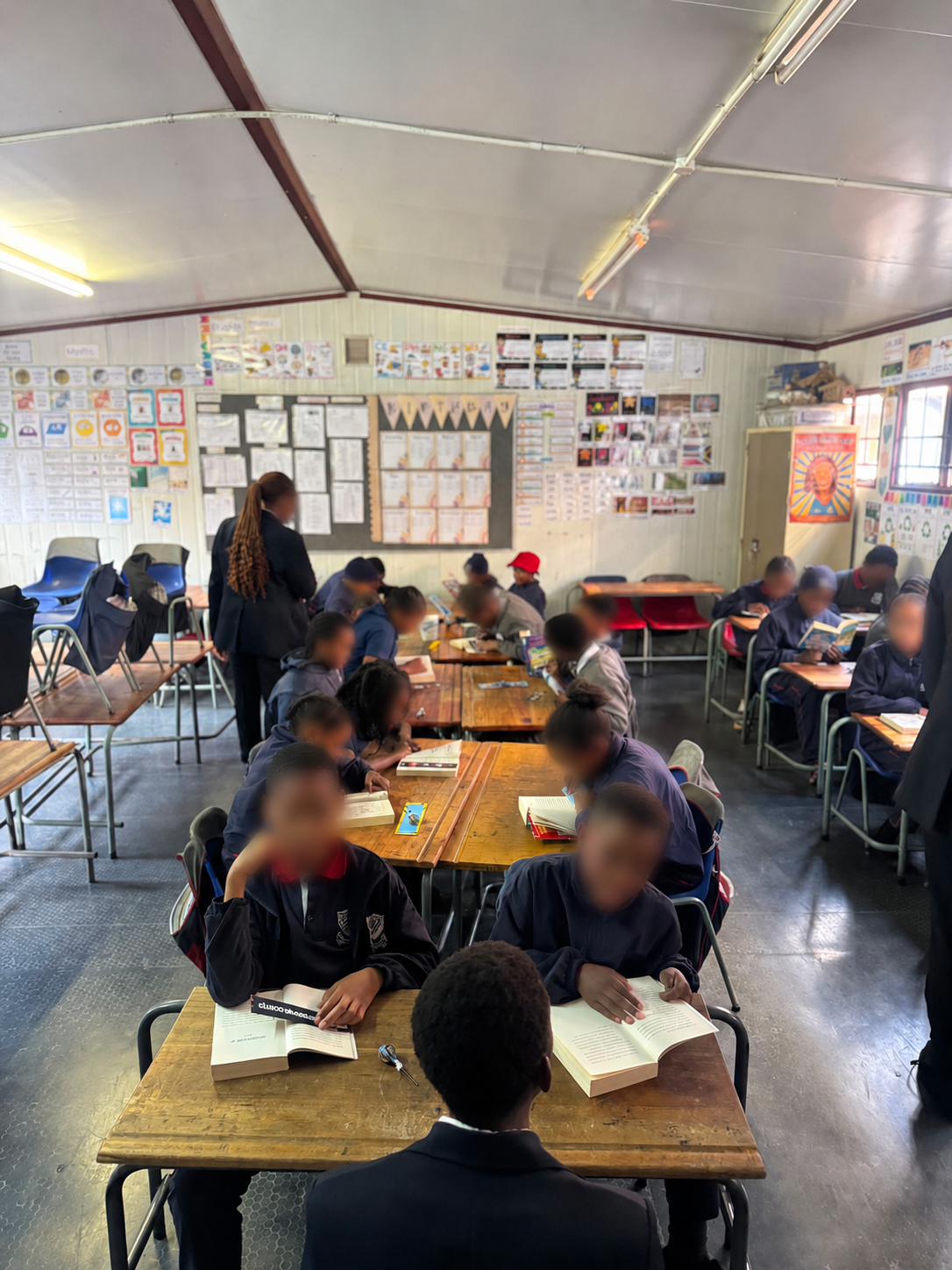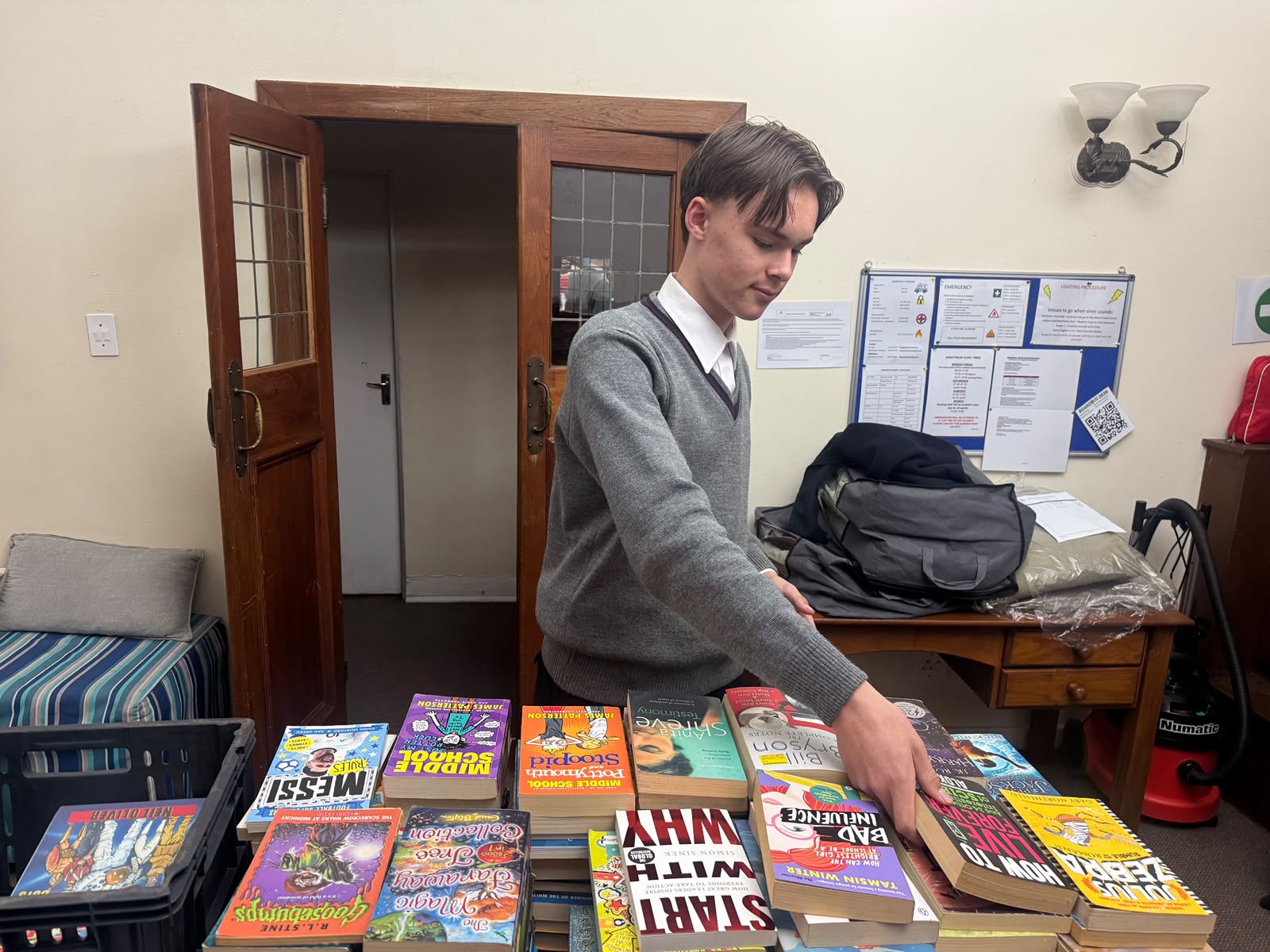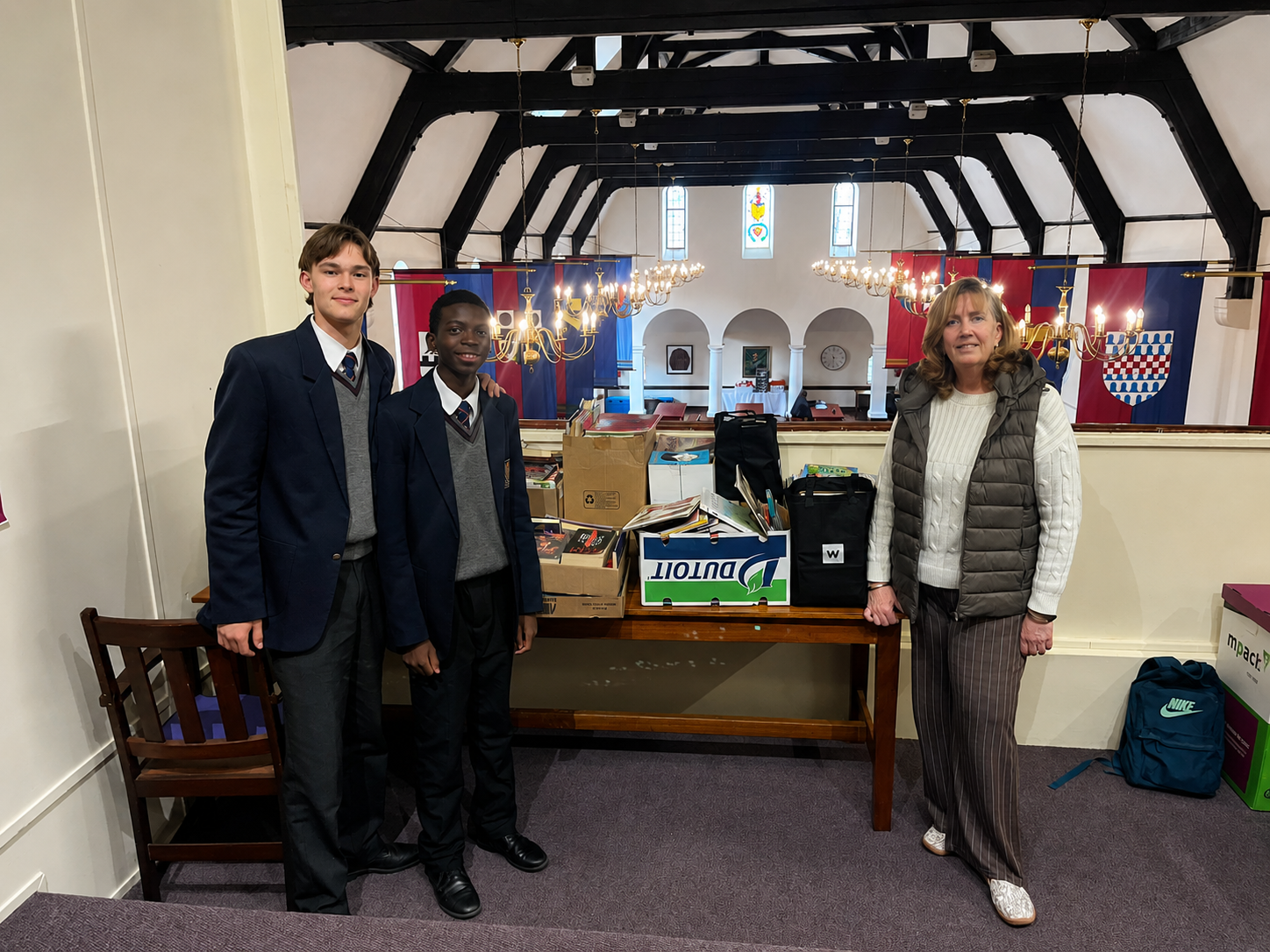

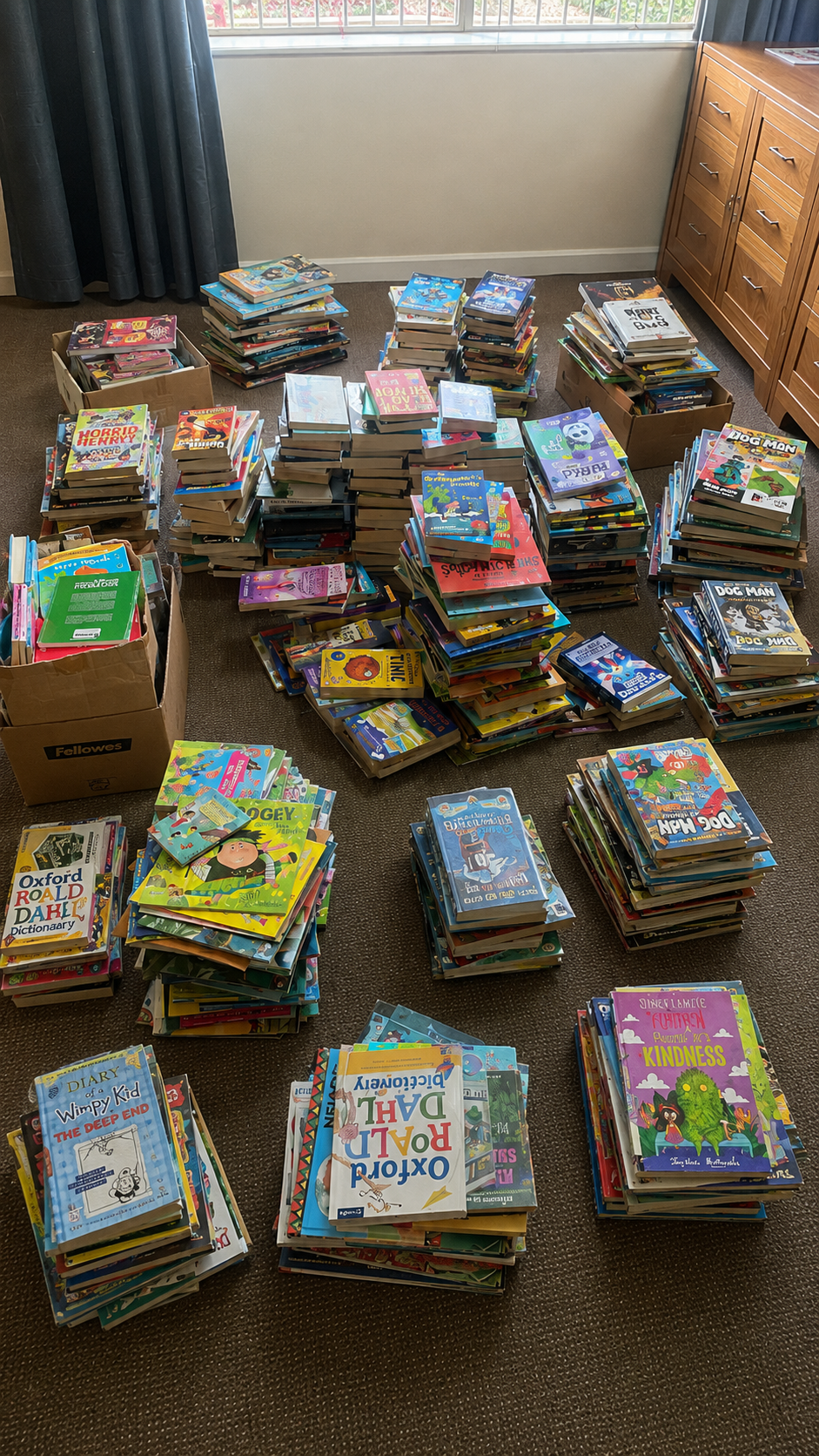
Next Chapter Jozi is proud to share a meaningful new step in our literacy journey: St John’s College has donated about 500 books to support our work with schools in Johannesburg.
The donation was made possible through the generosity and support of Sue Rabie, the St John’s College librarian, whose care for reading, learning, and young people helped turn a simple act of giving into something much bigger. For Next Chapter Jozi, this donation is more than a collection of books. It is a sign of trust, encouragement, and shared belief in what access to reading can do.
Books are often spoken about as resources, but in schools they become much more than that. A book can become the first thing that makes a learner feel curious. It can become the reason a learner spends time in a library. It can become a new word, a better sentence, a stronger imagination, or a quiet moment of confidence. When a school has access to books that are visible, organised, and cared for, reading becomes easier to start and easier to sustain.
That is why this donation matters.
Next Chapter Jozi’s literacy work is not only about collecting books and dropping them off. Our aim is to help schools turn books into usable reading access. That means supporting school libraries, reading corners, book organisation, classroom collections, and reading spaces that feel welcoming enough for learners to actually use. A donation of this size gives us the ability to think not only about quantity, but about how books can be sorted, placed, shared, and made part of a school’s reading culture.
The support from St John’s College also shows what is possible when schools and student-led initiatives work together. Next Chapter Jozi is led by students, but student-led does not mean casual. It means we are close to the learner experience, close to the problem, and serious about building practical solutions. A donation like this strengthens our ability to act responsibly and shows that young people can be trusted to mobilise resources with care.
Sue Rabie’s role in this moment was especially important. As a librarian, she understands that books are not just stored on shelves. They are used to open thinking, support learning, and build a culture where reading feels alive. Her encouragement and generosity helped make this donation feel personal, not transactional. It reminded us that literacy work depends not only on resources, but on people who believe those resources should reach further.
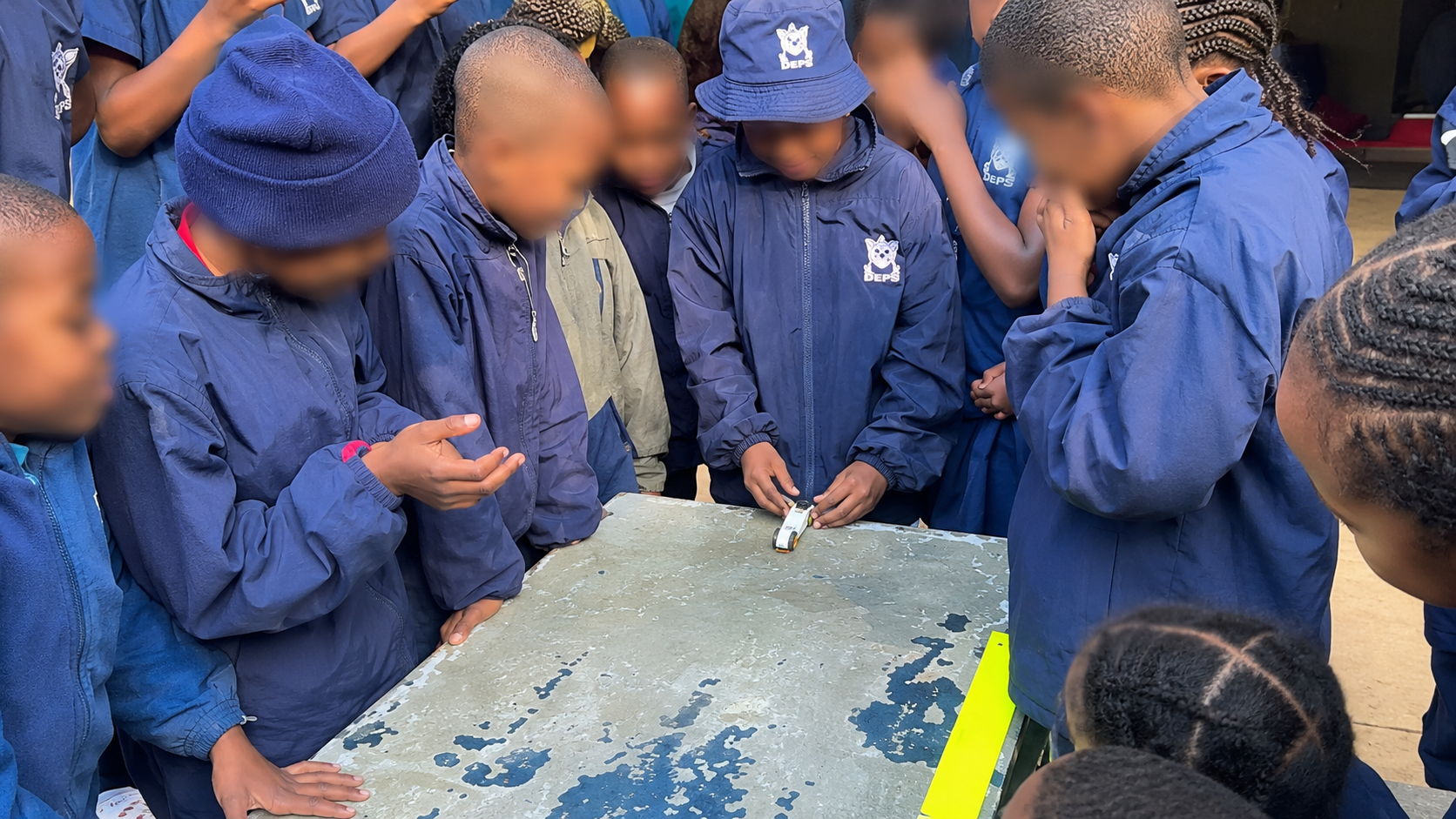
For Next Chapter Jozi, the books donated by St John’s College will support our broader literacy mission: helping under-resourced schools access books, strengthen reading spaces, and create environments where learners can read more often and more confidently. The donation also connects to our larger belief that education access is built in layers. Books matter. Libraries matter. STEM opportunities matter. Mentorship matters. Digital study support matters. Every part contributes to a learner’s next chapter.
Founder Jenovic Lumu said the donation represents exactly the kind of support Next Chapter Jozi hopes to build around its work:
This donation means a lot because it shows that people believe in what we are trying to build. For us, the goal is not just to collect books. The goal is to help schools turn books into real reading spaces and real opportunities for learners. We are very grateful to St John’s College and to Sue Rabie for supporting that vision.
The donation also gives the initiative fresh momentum. As Next Chapter Jozi continues working with schools, building partnerships, and expanding its literacy and STEM support, contributions like this help move the work from an idea into something practical. They make it possible to place books where they can be used, to support reading spaces that feel alive, and to build school partnerships with more confidence.
This moment is also a reminder that educational change does not always begin with something complicated. Sometimes it begins with a school choosing to share what it has. Sometimes it begins with a librarian who believes books should keep moving. Sometimes it begins with students deciding that access should not depend on where a learner happens to be.
To St John’s College and Sue Rabie, thank you for helping us write this next chapter.
The work continues.